
Season 2 / Episode 11

True Colours (soccer jersey politics with Joey DUrso)

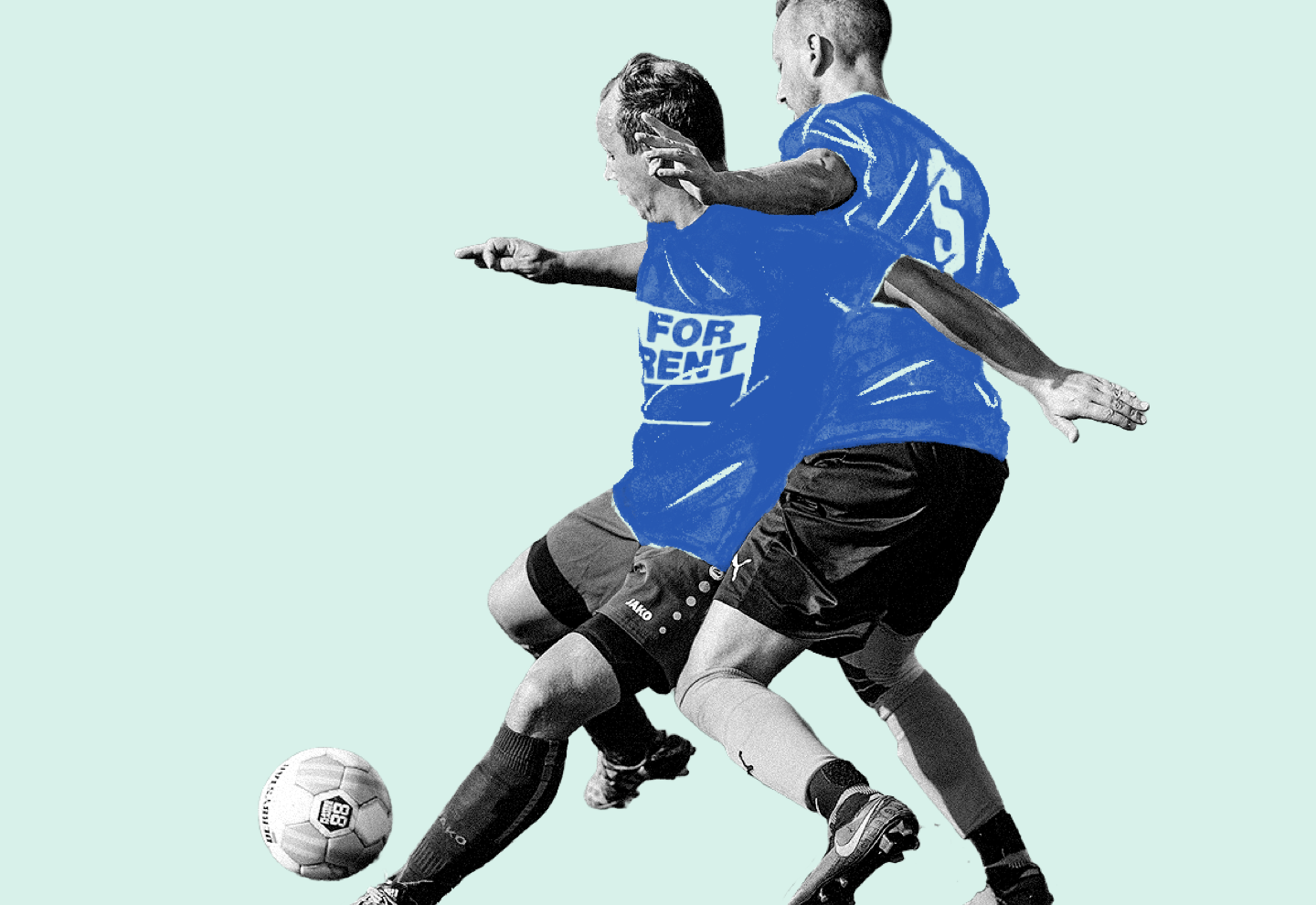
Advertising is a form of power. Who really owns your team?

PP_S2E11_Web

Episode Description

Power over sports is power over people, power over passion. Worldwide, there is no stronger sports phenomenon than football. So when you see your team, your favourite player, sporting a brand name on their uniform, particularly a brand associated with a world power (such as Arsenal and Real Madrid united by partnerships with Emirates), or with addictive products like gambling, that’s not neutral marketing. You're seeing an outright soft power flex.

Vass Bednar is joined by Joey D’Urso in this timely Policy Prompt episode where they discuss the reality of active geopolitics in the beautiful game. Joey is a journalist with a career focus on football (soccer) and politics, and he’s the author of More Than A Shirt: How Football Shirts Explain Global Politics, Money and Power (Seven Dials, 2025).

Mentioned:

Ronald Reagan’s Proclamation 5606, National Women in Sports Day: Reagan Library

Title IX, Richard Nixon’s amendment against the discrimination on the basis of sex in sport: Time

Real Madrid’s long-standing partnership with Emirates: [Real Madrid

Arsenal’s partnership with Emirates: Arsenal

Sportswashing: Wikipedia

Premier League clubs banning sports gambling logos from uniforms in 2026–27: The Guardian

Gambling companies circumventing advertising ban: BBC

Saudi Arabia’s 80% stake purchase of Newcastle United F.C. in 2021: Wikipedia

US sanctions Colombia soccer club for crime ties: Insight Crime

Aston Villa supports Acorns, children’s hospice: Acorns

Football teams owned by Red Bull: Wikipedia

Further Reading:

More Than A Shirt: How Football Shirts Explain Global Politics, Finance and Power (Seven Dials, 2025): Goodreads

Joey D’Urso bio: North Bank Talent

Credits:

Policy Prompt is produced by Vass Bednar and Paul Samson. Our supervising producer is Tim Lewis, with technical production by Henry Daemen and Luke McKee. Show notes are prepared by Rebecca MacIntyre, Libza Manna and Isabel Neufeld, who also handles social media engagement, brand design and episode artwork by Abhilasha Dewan and Sami Chouhdary, with creative direction from Som Tsoi. Original music by Joshua Snethlage. Sound mix and mastering by François Goudreault. Be sure to follow us on social media.

Listen to new episodes of Policy Prompt on all major podcast platforms. Questions, comments or suggestions? Reach out to CIGI’s Policy Prompt team at info@policyprompt.io


Featuring

PP_Joey D'Urso

Joey D'Urso


Joey D’Urso (guest)

You might watch and think, "Oh, I like Coca-Cola or like MasterCard." No one's going to buy a barrel of Saudi Arabian oil because they see it in the corner of a World Cup match. It's pure power, projection, geopolitics. It sort of washes the reputation of those countries, right?

Fundamentally, if you sponsor one of the biggest teams in the world, Real Madrid or Manchester United or Inter Milan or whatever, that's a billboard that is being worn for free by people all over the world. There is no sport, there is no cultural phenomena that is as popular around the world as football is.

Vass Bednar (host)

The World Cup may be the world's biggest ad campaign. Looking at a sponsor's logo on a shirt, it really tells you something, right? Not just what companies have money and who's doing well, but more specifically which industries are trying to look normal, beloved, or maybe even inevitable. And in that sense, soccer shirts are a surprisingly sharp way to read the world. In his book, More Than a Shirt, author, journalist Joey D'Urso looks at global politics, money, and power through 22 different soccer shirts. His argument is amazing. It's that shirts are not just shirts. They're movable billboards, national symbols, and actually compress stories about companies that want visibility, legitimacy, and reputational adjacency. They are a form of history and a way to understand power.

So let me tell you a little bit about Joey. He has written that he's obsessed with the topic and he spent the last few years traveling around the world investigating it. He's worked for the BBC, The Athletic, and The Times, and his book, More Than A Shirt, came out in June 2025. He also has a Substack newsletter. I loved reading his book.

Joey, welcome to Policy Prompt.

Let's get to shirts. The book is such an adventure and so well researched and sort of takes us through time and takes us to different places. I was really attracted to it because we talk about transformative technologies usually. And to think of a shirt, again, the static nature of a shirt, to think of a shirt as a transformative technology and just this vehicle for commentary about how the world is changing, I think is so savvy and I appreciate it so much. Maybe you can tell us a little bit about when shirts as an organizing principle, how did that land?

Joey D’Urso (guest)

Yeah, so the book is More Than a Shirt: How Football Shirts Explain Global Politics, Money, and Power. And certainly football originated in England in the 1860s and is a very old sport, but it's only in the last few decades really that I think shirts have taken on this big political economic significance. I mean, the first shirt sponsor was in Germany. Actually, Jagermeister was on a provincial team in Germany in about 1973.

Vass Bednar (host)

Oh.

Joey D’Urso (guest)

It wasn't really until the 1990s... Yeah. Do you guys have Jagermeister? You know what that is?

Vass Bednar (host)

We do. You know what? I had in my notes that I thought one of the first sponsors was Hitachi, but you would know better than me because you wrote the book.

Joey D’Urso (guest)

Which actually was Liverpool. That was the first really big club in England to have won. But this is quite obscure team in Germany, had Jagermeister back in '73. There are sort of distant dusty records that teams in South America might've had them in the '50s, but no one's quite sure. It didn't really start rolling until the '80s and the '90s. It was the '90s that football started really globalizing, big money pouring in England and all over Europe.

Vass Bednar (host)

So it starts in the '80s and '90s, but then the economy digitizes and yet shirts stay a very kind of static form of consistent advertising. When a company or a jurisdiction is sponsoring a football shirt, what's the calculus? What are they accessing? Is it being seen being associated with the players? Is it the fact that people purchase the shirts and then wear them, which is also a form of advertising? Is it a little bit all of the above? Maybe we could just set up why we see continued investment and sort of rival risk investment too.

Joey D’Urso (guest)

Yeah. I mean, I think there are a few reasons. I think at the early beginnings, it was very ad hoc. It would often be like a sort of local brewery. I don't know, just phone up the chairman and say, "Can we..." It wasn't very strategic, whereas more recently these things are worth tens of millions of dollars. There's a huge investment from companies they think about very carefully. I mean, fundamentally, if you spoke to one of the biggest teams in the world, Real Madrid or Manchester United or Inter Milan or whatever, that's a billboard that is being worn for free by people all over the world. But in the early days, I think there was a very direct financial transaction. It was like you're selling a brand of beer or a food or telecommunications or something that people can buy. Whereas now it's often more political.

It's Middle Eastern investment funds, it's Middle Eastern airlines, and they're not really advertising the airline necessarily. They're advertising the Middle Eastern country, Emirates, which sponsors Real Madrid, Arsenal, lots of other teams. Emirates is a legit airline that people use, but I think it's more about this sort of soft power geopolitics thing.

Vass Bednar (host)

You mentioned era and the book takes us through some eras starting from the '70s, maybe this kind of casual, very sweet, informal, the most authentic and almost adorable layer of sponsorship, but then it kind of goes off to the races.

Joey D’Urso (guest)

Yeah, that's right. And incredibly ad hoc. Aston Villa won the European Cup, now the Champions League in 1982, beaten by Munich and they had Davenport's Brewery. It was a local brewery on the shirt. Literally, they're probably just down the road-

Vass Bednar (host)

Oh, awesome.

Joey D’Urso (guest)

... knew the chairman from... And then you'd think, oh, they'd build on that and then get a... And two years later, there was no sponsor and then there wasn't one for three years. It was incredibly ad hoc. There was no strategy. And yeah, that all started to change in the '90s. You get lots of Japanese electronics companies sponsoring English teams, Hitachi, Sharp, JVC, and a lot of hardware. Italy, it was like washing machines. I think-

Vass Bednar (host)

Amazing.

Joey D’Urso (guest)

... relative to income, those things were much more expensive than they are now. A TV is really cheap now, that was a big one. And then in the 2000s, it became much more globalized. The biggest teams weren't just advertising to their domestic market anymore, they were advertising to the world.

Vass Bednar (host)

You hinted before when you brought up the, and I'm actually bad at pronouncing this word, Jagermeister, the kind of local clubs makes me think of almost like children's football or soccer teams, like the community center and stuff like that. And then you take us through this shift from local sponsors that more maybe reflect nearby community or the geography of teams more explicitly and then that globalization shift and acceleration to international firms and now sometimes even almost state sponsorship of shirts and the acquisition of teams. The shifting ownership of teams I think is an interesting parallel conversation in terms of geopolitics and private equity and ownership. Maybe could you take us through that arc a little bit more in terms of sponsorship growing?

Joey D’Urso (guest)

Yeah. So I think, I mean, as I was saying earlier, the sport has a very old... It's 150 years old. Even in North America actually quite booming, certainly in the US and the Northeast of the US before the Great Depression, there were big teams, had lots of fans, but then it all went wrong in the Great Depression. But it didn't really globalize, I would say, till the '90s. And the 1994 World Cup in the US was a huge turning point, which I think maybe people didn't realize at the time because it's not popular or certainly wasn't popular then among the majority of the American public.

Vass Bednar (host)

Really?

Joey D’Urso (guest)

But from a commercial perspective... In '94?

Vass Bednar (host)

Wait, in 1994, the World Cup wasn't popular?

Joey D’Urso (guest)

It was well attended.

Vass Bednar (host)

I don't know.

Joey D’Urso (guest)

It was really well attended.

Vass Bednar (host)

It was well attended, but not as much attention, you're saying in North America.

Joey D’Urso (guest)

But in the mainstream of American public opinion, there are USA Today columns from the time being like, "What is this stupid European game?" It was seen as something for women and children. There's a really great story about women's football, which took up much earlier than in Europe in the 1970s because of this Title IX or 11, oh, I've forgotten. Things signed by Ronald Reagan about equal access to the various facilities, which completely unintended consequences made colleges in the US invest loads of money in football because it was kind of cheap and easy to open up access compared to basketball or American football, as I would call it, these things require lots of resources and equipment. Whereas with football, soccer, you just need a pitch and some shoes or a ball. So if you want to really rapidly expand access to women's sport, football was the way that that happened in the US in the 1970s, which was an unintended consequence of this law signed by, sorry, not Reagan, Nixon.

But then yeah, the USA '94 was a huge commercial success because it's like we're seeing now with the World Cup in the US and Canada and Mexico, of course, the market is so big. The TV advertising is worth so much money. It's why the NFL is worth more money than European football, soccer leagues, even though far more people watch them because people are richer basically, bluntly. Americans are a lot richer than Italians and Spanish people and you have a country of 300 million people and there's just loads of money there. So '94 was this big moment where FIFA was kind of like, "Wow, this is where the money is." And I'm kind of going on a tangent here, but-

Vass Bednar (host)

It's okay.

Joey D’Urso (guest)

... but then football really started globalizing. And I think another really big factor is satellite television floating all around the world around the millennium and you've got Africa, Asia, these tiny villages in rural Africa and Asia watching kind of European football for the first time. And then after that, you have the mobile internet. I was talking to, I spent some time in India and you have tiny villages in India, which are by global levels, kind of really impoverished, have very basic living conditions, sanitation facilities, but they're streaming Premier League Champions League on their phones because-

Vass Bednar (host)

Wow.

Joey D’Urso (guest)

... it's so cheap now to stream mobile internet. So I think all these technological changes have massively changed things in the last 20 or 30 years and meant a sort of... I've spoken before about the ground war and the air war. Football did the ground war in South America a hundred years ago, spread into these cities, became this huge game. But the sort of air war of reaching people by TV, by the internet has only happened really quite recently.

Vass Bednar (host)

And now more streaming and kind of on demand. Are there football influencers? How is that economy?

Joey D’Urso (guest)

Yeah. Massive. Absolutely massive.

Vass Bednar (host)

Massive, right? Of course. Okay.

Joey D’Urso (guest)

And a lot of thing that people kind of worry about is that now people consuming the game in this sort of TikTok clips, influencers, personalities, people shouting at each other rather than sitting down to watch a game over two hours, when a lot of it is quite boring. It could be nil-nil, it could be zero, zero. It's not like basketball. We have a point every 30 seconds. Football is long periods of inactivities spiked by huge drama.

Vass Bednar (host)

Oh, my gosh.

Joey D’Urso (guest)

But is that...

Vass Bednar (host)

Yeah. Oh, I'm just saying, oh my gosh, football and the attention economy I hadn't really considered. Now you're making me think of football and film students who don't want to watch the whole movie or our kind of attention crisis, but we can keep that as a tangent because that doesn't connect to shirts. And then how do fans react to some of that soft power and geopolitic? Does it matter? Does that calculus factor into maybe a football team's decision to accept or even court the partnership in the first place?

Joey D’Urso (guest)

I mean, I think fans generally don't care that much or pay too much attention with the brutal honesty, but I think that's one of the clever things about it is by taking, for example, Mauritius, which is the state airline of Dubai and the UAE, which is an autocratic country in many ways. But by associating it with Real Madrid, the dominant team of European football, the Champions League of the last 10, 15 years of Arsenal, one of the best supported teams in England who are not only sponsored by Emirates, their stadium in London is called the Emirates Stadium. You sort of remove this brand name from the context of Dubai and from an oppressive government in all sorts of ways, something that gets a lot of criticism to something completely different that feels very apolitical, which is one of the reasons I think nation states do it.

Vass Bednar (host)

Is that what is referred to as sport washing?

Joey D’Urso (guest)

Yeah, that's a term that comes up a lot, sports washing. Absolutely. And I'm sure it's a term you're hearing a lot in Canada and the US coming up to the World Cup. I mean, sports washing has many forms. One is the sort of direct sponsorship for... I mean, it's normally about nation states. So Russia hosting the World Cup in 2018, Qatar hosting the World Cup in 2022, Emirates sponsoring top teams. It sort of washes the reputation of those countries. But I think particularly for Qatar, the reason they do it is they're a tiny little country with opponents on all sides and it kind of makes Qatar harder to invade. It makes Qatar's existence more stable because you have lots of foreign money coming in, you have lots of foreign visitors flying in and out. It sort of knits you into the world economy in a way that almost nothing really does because there is no sport, there is no cultural phenomena that is as popular around the world as football is.

Vass Bednar (host)

You know we call it soccer, but that must be annoying for you to hear.

Joey D’Urso (guest)

Yeah, absolutely. \[inaudible 00:12:30\], but yeah. Yeah.

Vass Bednar (host)

It was like hard... I know, I know. Don't worry. We totally get it.

Joey D’Urso (guest)

And that's okay. That's okay. And it's originally an English word, as many Americans have reminded me, the abbreviation of association football, soccer, and the English were using it before the Americans were. So yeah, no soccer shaming here.

Vass Bednar (host)

Policy Prompt is produced by the Centre for International Governance Innovation. CIGI is a nonpartisan think tank based in Waterloo, Canada with an international network of fellows, experts, and contributors. CIGI tackles the governance challenges and opportunities of data and digital technologies, including AI and their impact on the economy, security, democracy, and ultimately our societies. Learn more at cigionline.org.

The book tackles the online gambling boom as well. And we noted that the Premier League has now banned gambling sponsors on the front of shirts, that's going to start in 2026 or maybe next year. That seems like a pretty big deal. So if football is kind of the world's biggest ad campaign, what happens when the ad category is kind of a form of addiction? How should we think about or start to reconcile the fact that it was normal for online gambling to be sort of elevated through the sport?

Joey D’Urso (guest)

Yeah. And I think, I mean, I don't know the situation of the laws in Canada, but I do in the US and that it's growing incredibly quickly. And I've just spent some time in Brazil, which is similar. It's absolutely booming. It's everywhere. But it's kind of interesting from a British perspective because the UK was kind of patient zero. It massively liberalized its gambling laws in January 2007, which completely unknowingly was a few months before the first iPhone came out and changed gambling forever. Online gambling then was like nerdy men in their bedrooms with big desktop computers and now it's like in everyone's pocket. And the UK has kind of been on a journey where now gambling is seen as certainly not glamorous, online gambling. It's seen as a social problem, social harm. It's incredibly ubiquitous and the authorities are sort of slowly clamping down on it more and more, but it's everywhere.

Vass Bednar (host)

In Canada too, we're not there. We've normalized the market and we're capturing value from it. So I think that's the bigger tension for Canada in a way, but so sorry to interrupt you.

Joey D’Urso (guest)

Yeah, no, not at all. I mean, I've spent time in the US a couple of years ago and I was really struck by the conversation around it. The way it looks on TV is like glamorous. It's exciting. There's none of this kind of if the fun stops, stop, this is actually linked to loads of social problems, but I think that will come down the track in five or 10 years. I think about gambling addiction that makes it very different from, say, alcohol or drug addiction is you can't see it in someone necessarily. If your loved one or friend is addicted to alcohol or drugs, you would probably realize pretty quickly. Whereas if they're constantly on their phone at home betting, you might not never know until they have some huge mental health crisis or something.

Vass Bednar (host)

And what about the phenomenon of Chinese gambling sponsors being on English league shirts where maybe it seems like in the immediate audience there's no market, but these companies are still kind of taking some of the most sought after sponsorship spots. Should we think of that as more of a sport washing, normalization, advertising element or?

Joey D’Urso (guest)

Well, it's really shady and it's something I've done a lot of work on over the years. Basically, gambling is massive in China. It's culturally massive in the home, little games for cards and money, but much more so than in Europe or North America, but gambling companies are illegal, they're banned, but Chinese people like watching Premier League or European football and the way they advertise is companies will advertise on the billboards in stadiums in England or on shirts at stadiums in England, so preventing any Chinese ban. But these companies are complete kind of shadows. They're impossible to find out who runs them. They're often based in Vietnam and the Philippines and through a lot of work that I've done and other people have done, I've basically realized that lots of these companies are linked to incredibly shady organizations linked to human trafficking, really serious crime, money laundering.

Where gambling is illegal, you often have to scrap hard on the surface to find organized crime for all sorts of reasons. And that is clearly some organizations like this were sponsoring top level football clubs in England for many years.

Vass Bednar (host)

And then again, you said earlier that for the average person or even the average fan, there's not maybe as much scrutiny or attention on the politic of the sponsor. Do you see that changing? Are there hints of that to create more of a maybe consumer or crowd pressure on the future of these advertising kind of slots and logos?

Joey D’Urso (guest)

I mean a bit. I think Germany is an interesting example because Germany has a much more political fan culture certainly than in England or in Italy or Spain or any of the other big European countries. So we've seen it a bit in Germany. There's an interesting one recently in England with Arsenal and Visit Rwanda, the tourism board for the nation of Rwanda, which has been linked to all sorts of human rights abuses recently in the Congo. And they sort of quietly canceled back quite recently and there's quite a lot of criticism of it. But I think, I mean, I'm always quite careful not to be... I never want to be hectoring or telling people that they should be enjoying this sport and that the sort of day-to-day being a fan should be this sort of broad and anxious political thing because I think people do view sport as escapism and if you push it too hard, you sort of turn people off that conversation.

But I think there are some particularly egregious examples like Newcastle United being owned by the state of Saudi Arabia or the Public Investment Fund of Saudi Arabia, which I think is just so blatant and so obnoxious that I think that should be called out.

Vass Bednar (host)

So maybe there's not as much awareness and thank you for pointing to that ownership again. Do you think that fans sort of maybe just see it as the cost of the business of sport, like people are willing to sort of discount or not offer that scrutiny or sort of that double click or even that it's a more passive consumption of say the Visit Rwanda campaign or the cryptocurrency or OpenAI. I guess I'm grabbing at examples actually that are advertising during the Super Bowl, which I think has a tangent here in terms of bubbles and peaks and valleys in a way. I'm not even asking you a question. I'm just speculating. So sorry.

Joey D’Urso (guest)

No. Well, there was the Crypto Bowl about three years ago, which is when it was like Larry David was online and it was absurd. And the whole thing is embarrassing for everyone concerned now.

Vass Bednar (host)

No, totally. And I think that's an interesting parallel in terms of when we're watching sports and those major games, what's the complimentary advertising that's happening around that? And maybe we're more aware of that as an ecosystem. Let's do a little bit more case studies. This is going to be more, I guess, some of your greatest hits. So feels hopefully not too redundant for you, but how did the murdered leader of a drug cartel wind up on a football jersey?

Joey D’Urso (guest)

Yeah, so that's a pretty crazy story from Colombia, from Medellín, Colombia, which not that long ago, we're talking in the '90s, was the most dangerous place in the world. People were gunned down the drug cartels, cocaine, Pablo Escobar, and this guy became incredibly rich getting cocaine from the coca leaves of rural Colombia, turning them into this powder, which then went crazy in New York and Miami and then all over the world. And a few people got incredibly rich and it was incredibly violent and people were just gunning each other down over tiny sums of money.

The Americans took a great interest in this and ended up killing him in Medellìn in 1993. And after that, things kind of scattered a bit. It was complicated. There were rivals vying for power. And one offshoot was the Envigado Cartel in a place called Envigado, which is actually where Escobar's political career began.

And it's known for football, James Rodriguez, who is the most famous Colombian footballer of modern times, he started there, but this club was owned by a drug cartel called the Envigado Cartel. And the guy who ran it was murdered in 2006, but his son, as a loving gesture to his father and put his silhouette of his father on the back of the shirt. So these players running around with a murdered drug gangster on the back of their shirts. And this club was eventually sanctioned by the US government. It was put on the Clinton list, which is a list that originated in the '90s under Clinton of sanctioned entities all over the world. And one was this football club. So for a while, they played with no sponsors at all because no soft drink companies, alcohol companies in Colombia that typically sponsor clubs, they didn't want to go anywhere near them because dealing with a sanctioned entity makes your life very hard. It means you can't deal with American banks and all sorts of things.

So for this period around the sort of early 2010s, they had no sponsor at all and a dead gangster's face on the back, which is just a quite obscure story from Colombian politics and history, but I think a kind of amazing one that tells these much bigger stories because football was such a big part of the cartels in the '80s and Athletico National was Escobar's team. He had La Catedral. If you've seen Narcos on Netflix, La Catedral was this open prison outside Medellìn where he had incredibly luxurious and lavish parties there and Diego Marazano came to visit and all these things. It wasn't really a prison, but football was such a huge part of this kind of prestige of that. And I think all over the world, you see shady people, frankly, whether they be outright criminals or political leaders using football as a vehicle to not necessarily make money, actually to lose money, to spend money, but to make themselves feel important, to make themselves kind of cool and glamorous, right? It's a good place to host business contacts. And so a lot of that went on in Colombia in the '80s and '90s.

Vass Bednar (host)

Your book has 22 shirts. Was there a 23rd or a shirt you wish you maybe snuck in or that has come up in some of your supplementary research or that didn't make the cut that we can give you an opportunity to touch on a little bit?

Joey D’Urso (guest)

Well, there's certainly... I didn't go to South America. Well, I went to Colombia, but Brazil, Argentina, have always just completely fascinated me and Uruguay. I'm actually in Uruguay at the moment, and I'm working on a new project, which I can't say too much about now, but it involves going to lots of football in Argentina, Uruguay, Brazil. I mean, I think those countries I didn't speak as much about as I would like and that's for future... But yeah, I mean, Buenos Aires, I think is the biggest football city in the world and interestingly a globalized club like Boca Juniors has been sponsored by Pepsi and BBVA Bank. An interesting example of international brands seeking out a club beyond Europe, which is quite unusual, I think.

Vass Bednar (host)

With the World Cup coming up, I mean for Canada, the World Cup feels more... there's this overt geopolitical undercurrent for us, but let's put that aside. What should we be looking for thinking about in terms of sponsorship and advertising and how all of this has evolved? Because I mean, we've got the anchor of the shirts and teams. You've mentioned advertising within stadiums, which is also evolving and digitizing and then there's the layer of sponsoring individuals or having ads when we're watching on television if we're not streaming something. But maybe we could just start to look ahead to that event and the politics of advertising both directly and indirectly.

Joey D’Urso (guest)

Yeah. So the interesting thing about international football is that the shirts don't have any sponsors and they never have done. But the reason for that isn't some sort of noble ideal, it's because FIFA have their own sponsors on the billboards of every stadium and they don't want to be competing for that with the shirts. But yeah, you have huge top global brands like Coca-Cola, Visa or MasterCard, but you also have Saudi Aramco, the Saudi State Oil Company, who basically bankrolled the recent Club World Cup in the US. It was a bizarre little circular thing of the Club World Cup needed money, the media company needed to be paid for its rights that was streamed for free and Saudi Aramco wanted its advert everywhere. So it's this sort of triangle where the billion dollars, a billion dollars changed hands weeks before the tournament started. And yeah, Saudi Arabia, billion dollars, that's no big deal.

So yeah, you'll see the Saudi state oil company. But the weird thing about that, is you might watch and think, "Oh, I like Coca-Cola or like MasterCard." No one's going to buy a barrel of Saudi Arabian oil because they see it in the corner of a World Cup match. It's pure power, projection, geopolitic.

Vass Bednar (host)

Speak for yourself, Joey.

Joey D’Urso (guest)

Yeah.

Vass Bednar (host)

Yeah, speak for yourself.

Joey D’Urso (guest)

Can you even buy a barrel of oil? I've got no idea. Maybe you can.

Vass Bednar (host)

Are there firms or states that you are anticipating might become future sponsors? Is there an element to your ongoing analysis as a fan, as an analyst, as an expert that you sort of have on your mood board?

Joey D’Urso (guest)

Football seems to often just reflect broader economic political changes often a year or two later like crypto. But then AI, that's where the biggest companies of the world now. That's where so much business, energy and money is. So I would not be surprised if we see some big AI companies sponsoring or even owning clubs pretty quickly. As for nation states, well, it tends to be authoritarian countries with lots of oil because they can afford to splash it around. I mean, in democracies, in places like the US or Canada or the UK where you have lots of stadiums, you can host an event pretty cheaply, but things get controversial in democracies that don't have great infrastructure.

Morocco is hosting the World Cup in 2030 with Spain and Portugal, and it's been really controversial in Morocco. There's been big protests because of public money going to stadiums, not to healthcare and education or whatever else. We saw very similar things in Brazil in 2014 and it's easier, you're Qatar, you don't have a voting public, you just build a stadium. So that's why I think a lot more energy and football is flowing towards these kind of countries. And Azerbaijan.

Vass Bednar (host)

Do you wear football jerseys casually in everyday life? Is this part of your-

Joey D’Urso (guest)

Yeah.

Vass Bednar (host)

... experience as a fan and then do you have a favorite one because we were kind of curious.

Joey D’Urso (guest)

Yeah. Well, I'm a big fan of Aston Villa in England. Yeah, they have one which I write about in the book, which they're sponsored by Acorns, which is a children's hospice for dying children, looking after them in there, which is a wonderful cause. And one that I was quite aware of as a kid growing up in the same area, it was often like people would raise money for it. And that was on the shirt for three years, not that long ago, like 2008 to 2010. And the chairman just wanted to do it as a nice gesture. The American guy, Randy Lerner, who also sponsored the Cleveland Browns. But it's kind of a no-brainer now. No one would do that anymore because you're just leaving money on the table. You're leaving S$20, 30 million that could be a dodgy gambling firm. So it was kind of nice, but also an end of an era where that would even ever happen.

And we also saw Barcelona who had UNICEF on their shirts for years. But again, that is over. And it's just leaving so much money on the table and there'll be such a tangible decline in your team's performance that no one does it anymore. There's just too much financial pressure.

Vass Bednar (host)

Obviously the ads aren't working on me. I can't differentiate them. Are we going to ever get away from fountain drinks?

Joey D’Urso (guest)

Yeah, I think it's just one of those unusual products that is kind of sold in every country in the world and popular in every country in the world. There's not much like that, which I guess explains it. And a real buyer, what's the word? Not Monopoly, but too. Biopoly. Is that a word?

Vass Bednar (host)

Duopoly. Yeah.

Joey D’Urso (guest)

Duopoly, that's it. Duopoly. There's not really anyone else. So it's like Pepsi is probably directly taking market share from Coca-Cola and they're sort of incentivized to throw loads of catch at it because if they don't, they'll step behind. But yeah, you see Pepsi and Coke everywhere in South America, like one or the other, as you do all over the world.

Vass Bednar (host)

And I suppose Red Bull popping up more and more in some sporting elements.

Joey D’Urso (guest)

Well, Red Bull's interesting because that owns a lot of clubs and it owns... Red Bull Leipzig in Germany was the first, or sorry, Saltzberg and Austria was the first, then Red Bull Leipzig. They own Bragantino in Brazil. They own a big share of Leeds United in England, Red Bull and New York Red Bulls. I've been to their stadium actually in New Jersey. Yeah, that's quite different to Coca-Cola and Pepsi. That's a sporting ownership model, but it's all about advertising soft drinks, right? That's why they own these clubs. That's their ultimate goal is to sell energy drinks.

Vass Bednar (host)

At the end of the day, at the end of the day, that is their goal, not necessarily ours. You've reminded us that there's so much more to the shirts that we're going to see when we watch soccer, when we watch football and when we're thinking about sporting events writ large. Thank you for everything you put into the book and we're looking forward to your next project and wish you the best with it.

Joey D’Urso (guest)
Vass Bednar (host)

Thank you, Joey.

Policy Prompt is produced by me, Vass Bednar, and CIGI's Paul Samson. Our supervising producer is Tim Lewis with technical production by Henry Daemen and Luke McKee. Show notes are prepared by Lynn Schellenberg, social media engagement by Isabel Neufeld, brand design and episode artwork by Abhilasha Dewan and Sami Chouhdary, with creative direction from Som Tsoi. The original theme music is by Josh Snethlage.

Please subscribe and rate Policy Prompt wherever you listen to podcasts, and stay tuned for future episodes.